
Article Summary: In this episode of Did It Close?: Apartment After Hours, we discuss how to become a better commercial real estate broker through a few different strategies: know what separates good brokers from bad brokers, understand marketing strategy, prepare for the future, and build a reliable team. See our past episodes for more content.
Commercial real estate looks simple from the outside: find a buyer, find a seller, collect a fee. But anyone who’s lived through real deals knows the truth—this is a craft. The best brokers don’t just “pass paper.” They shape outcomes, protect clients from avoidable mistakes, and run a process that pulls value out of the market.
In a recent Apartment After Hours conversation, veteran broker Reid Bennett joined us to unpack what separates good brokers from bad brokers, why marketing strategy is often the difference between “good price” and “best price,” and how to survive the chronic stress and income volatility that wash most people out.
Below is a practical, field-tested playbook to become a better commercial real estate broker—plus a few research-backed realities to keep you honest and operating at a higher level.
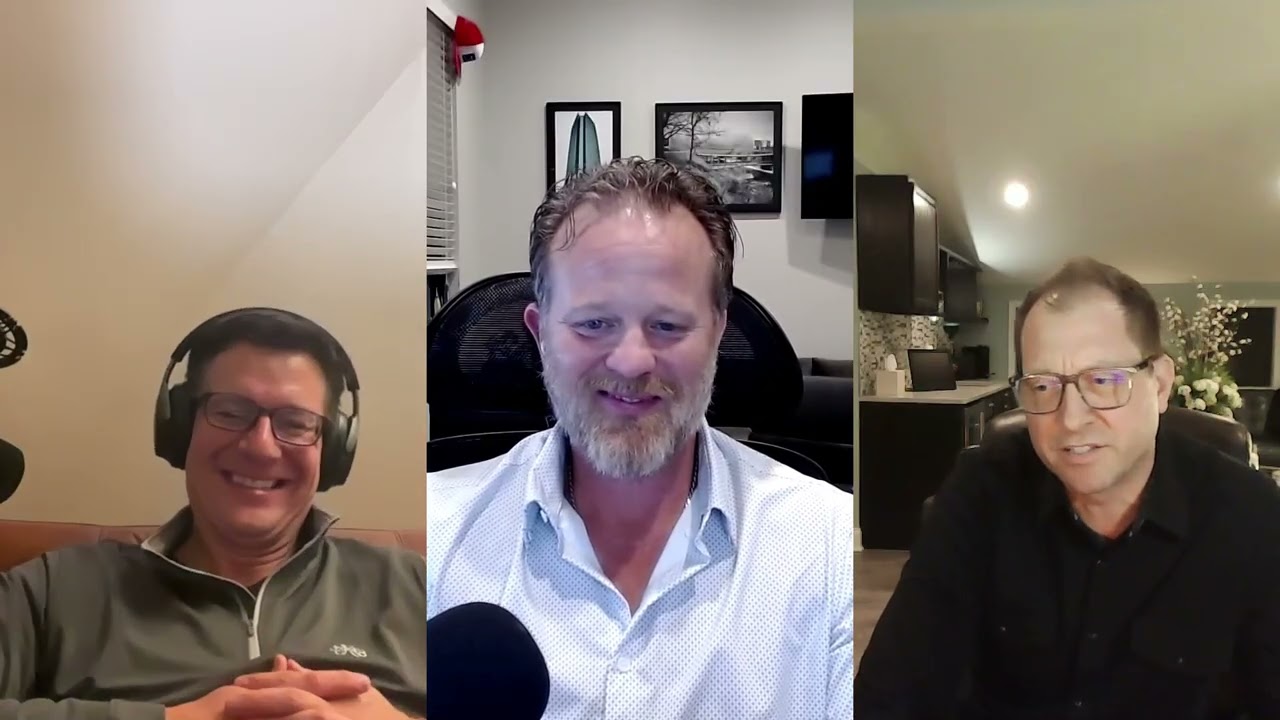
Table of Contents
Know What Separates Good Brokers From Bad Brokers
Understand Marketing Strategy
Prepare for the Future
Build a Reliable Team
Closing Thought: Becoming A Better CRE Broker Is A Long Game
About Reid Bennett
About Did It Close?
Know What Separates Good Brokers From Bad Brokers
Good brokers rise to the top of the industry. Bad brokers get squeezed out of the industry and into an entirely different career path.
Here are some of the biggest differences we see in great commercial real estate brokers:
The “Paper Passer” Problem
Reid put it bluntly: Most people who fail in brokerage fail because they become paper passers—brokers who take a number from Buyer A, relay it to Seller B, and repeat. That isn’t brokerage. That’s message forwarding.
A paper passer typically:
- Treats negotiations like a ping-pong match (“They said 15. They said 14.5.”)
- Avoids difficult conversations (pricing, motivation, risk, timing)
- Lets the deal “happen” instead of driving to a clear decision
- Adds no leverage, no clarity, and no structure
In contrast, a high-performing broker creates momentum and meaning. They don’t just transmit information—they interpret it, frame it, and use it to advance the deal.
Value-Add Brokers Think Like Operators, Not Messengers
When Bryan described multifamily brokerage as being closer to “selling financial instruments secured by real estate,” he hit on why some brokers level up faster. The best brokers aren’t dazzled by the building—they understand the investment thesis.
Value-add brokers:
- Diagnose the client’s true objective (not just “sell” or “buy”)
- Control the narrative (why this deal, why now, why this buyer)
- Translate underwriting, debt, and risk into clear tradeoffs
- Run a process that reduces uncertainty and increases confidence
That’s why experienced clients want you in the middle. Reid shared a client who basically admitted, “I’d rather have you in the deal because I’m going to screw it up emotionally.” That’s a value proposition you can build a career on: You’re the stabilizer, not the agitator.
Client Empathy Isn’t “Soft”—It’s A Negotiating Weapon
One of the most practical takeaways: The best brokers are obsessively client-centered.
Reid described a coaching concept that reframes presentations: Instead of leading with your track record, office footprint, and “we’re the best” speech, you lead by showing the client you understand them: their partners, internal dynamics, distractions, stress points, and end goals. When a client feels heard, friction drops and trust rises.
That trust is what buys you:
- More honest disclosures
- Faster decisions
- Better cooperation during diligence
- A longer runway for repeat business
The Mindset Shift: “I’m Great” Vs “We’re Great”
Bryan referenced a leadership framework that’s extremely relevant to brokerage: the difference between being a “Stage 3” performer (“I’m great—everything must flow through me”) and a “Stage 4” connector (“We’re great—let’s win together”).
Here’s what that looks like in brokerage:
“I’m great” broker behavior
- Hoards relationships
- Refuses to introduce buyers/sellers without controlling every step
- Turns every conversation into a reminder that they’re the key
- Creates dependency instead of partnership
“We’re great” broker behavior
- Connects people strategically
- Builds a triad relationship (buyer–broker–seller) built on trust
- Adds structure and clarity, not ego and noise
- Plays long-term, even when it risks short-term control
David raised the right counterpoint: “As a broker, do you really want to put buyer and seller together and say, ‘You guys go work together’?” The answer isn’t to disappear—it’s to stay essential by running a professional process and protecting both parties from missteps.
In practice, your job is to be the translator, shock absorber, and project manager—not the gatekeeper.
A Simple Self-Audit: Are You Actually Adding Value?
Before every client interaction, ask:
- What decision needs to be made next?
- What’s unclear or risky right now?
- What does the other side really want?
- What’s the path of least resistance to a “yes”?
- What would happen if I wasn’t involved?
If you can’t answer those, you’re drifting toward paper-passing.
Understand Marketing Strategy
Marketing isn’t a brochure. Marketing is the mechanism that creates leverage.
The episode hammered a key truth: buyers love off-market; sellers usually win on-market.
On-Market Vs Off-Market: Whose Interest Are You Serving?
Reid summarized it cleanly:
- As a buyer, you want off-market access (less competition, more control).
- As a seller, you want on-market exposure (more competition, higher price).
David went further: He struggled to see why a seller would ever go off-market unless confidentiality was absolutely critical. His logic is hard to dispute—a competitive bidding process is the most reliable way to discover true market pricing.
The Biggest ‘Fake Off-Market’ Mistake: Multi-Broker Chaos
Reid called out a practice that burns everyone: Owners handing a T-12 and rent roll to five brokers and saying, “Bring me a buyer.”
Why it fails:
- It creates confusion (“Who actually has the listing?”)
- It triggers rumor pricing (“I heard it’s trading at X”)
- It wastes buyer time (duplicate outreach, inconsistent intel)
- It kills credibility (and credibility is currency)
If you want to be a pro, learn to say this politely but firmly:
“Pick one broker. Either we run a broad process, or we do a targeted marksman approach. But we can’t do ‘five brokers fishing.’”
The Role Of Exclusivity: Control The Process Or Get Commoditized
David’s perspective was clear: The longer he’s in the business, the more he insists on exclusivity—because without control, you’re investing time, money, and reputation into a process you don’t own.
That matters even more when you consider the real cost of marketing. Bryan mentioned spending thousands immediately on items like professional photography, drone work, and video. That kind of upfront spend is common in modern marketing-heavy brokerage, and it’s one reason many firms push marketing fees or commission credits to protect against wasted effort.
Incentive Fees, Tiers, And Aligned Interests
Incentive structures came up repeatedly because they’re one of the best ways to align broker and seller incentives—especially when pricing outcomes are uncertain.
David described a tiered approach and defended it even when the market turns and fees compress. His logic: if you claim you can push pricing, you should be willing to bet on it. That’s how you earn trust.
A useful framework:
- Base fee for executing the process professionally
- Upside participation for performance above a threshold
- Clear rules on timing, tails, and protected parties
Bryan shared a particularly clean version: If a prior buyer is “reserved” at $30M and the broker runs a process that pushes that buyer (or another buyer) to pay more, the broker should participate in the incremental value above $30M. Most sophisticated owners understand that immediately: “You got me an extra million, you deserve to be compensated.”
Protect Lists And Tails: Defend The Work You Actually Did
This is where better brokers separate themselves: they don’t just argue about commission—they define value and causality.
- If your marketing launch creates urgency that moves a buyer up in price, that’s value.
- If your process organizes diligence and de-risks execution, that’s value.
- If your positioning reframes the story investors must sell internally, that’s value.
The tail and protect list are there to ensure you’re compensated for value you created—not merely for being physically present at closing.
Off-Market Cautionary Tale: The Deal That Got Away
Reid shared a painful story: A $95M off-market transaction with a $1.5M fee was under contract, diligence started, and then the buyer backed out. Two months later, the asset sold for $125M.
The lesson the group pulled from it was sharp: Off-market can hide the real clearing price. If the seller had run a proper market process, the higher number likely would have surfaced earlier—with less risk and more certainty.
Prepare for the Future
Becoming a great commercial real estate broker requires resilience, foresight, fiscal responsibility, and endurance. Without those four qualities, you’ll struggle when the market cools down—and it eventually will.
Here are some best practices and philosophies to keep in mind while building your career:
Brokerage Is A Chronic-Stress Profession
Bryan described something every career broker recognizes: The low-level stress doesn’t fully go away. Even after a big closing, you’re aware the pipeline must be rebuilt.
That matters because chronic stress has well-documented impacts on decision-making and health. Harvard Health notes that repeated activation of the stress response takes a toll and is associated with both physical and psychological consequences over time.
Harvard Business Review has also written about how sustained stress can contribute to poor decision-making and burnout, which directly undermines performance in high-stakes work.
If you want to become a better commercial real estate broker, you can’t treat this as a side note. Your energy management is part of your production system.
Income Volatility Is Not A Bug—It’s The Model
This business rewards performance, but the ramp is real. NAR’s member research shows a sharp difference in income by experience—many newer agents earn very little early on, while experienced professionals earn substantially more.
For example, the NAR Member Profile highlights that a large share of members with two years or less experience made under $10,000 in a recent year, while more experienced cohorts were far more likely to exceed $100,000.
And even beyond brokerage-specific surveys, the broader labor data underscores wide ranges in broker earnings. The U.S. Bureau of Labor Statistics reports a May 2024 median pay for real estate brokers and shows a wide spread between lower and upper percentiles—evidence of a distribution where outcomes vary dramatically.
Practical Resilience: What Top Brokers Actually Do
Here are four habits that keep you in the game:
1. Build reserves like a business, not like an employee. David’s advice was blunt: Early on, you need significant reserves (he said 12–24 months). That’s not always realistic—but the principle is: treat cash as oxygen.
2. Separate ego from outcomes. You can do everything right in a down market and still have a slow year. That doesn’t mean you’re broken. It means you’re in a cyclical business.
3. Run a system, not a mood. Your prospecting cadence can’t depend on “feeling motivated.” Top brokers execute a weekly operating rhythm: outreach blocks, follow-up blocks, underwriting review, pipeline review, and relationship touches.
4. Protect your decision quality. If stress is high, decision quality drops. Create buffers: sleep, training, and time away from constant stimulation. Your ability to negotiate, think clearly, and stay emotionally steady is a competitive advantage.
Build a Reliable Team
A great broker with a weak team becomes a bottleneck. A good broker with the right team becomes a machine.
Two Team Models That Work
David described two common structures:
1) Hunter-gatherer teams (shared production)
- Multiple brokers originate deals
- Fees are shared with a structured split
- Best for high-energy teams with multiple rainmakers
2) Specialist teams (origination + servicing)
- One or two primary originators
- Other brokers/team members specialize (diligence, follow-up, underwriting coordination, process management)
- Best when role clarity increases throughput
Both models can work. What doesn’t work is role confusion—when everyone is “kind of” responsible for everything.
Related Reading: 1031 Exchange & DSTs: What Investors Need to Know
Splits Must Evolve—Or You’ll Lose People
Reid emphasized that splits and incentives can’t be set once and forgotten. Contributions shift. Markets shift. People grow. If the comp model doesn’t reflect reality, resentment builds and talent leaves.
A simple annual “team comp audit” agenda:
- Who originated what?
- Who carried execution?
- Where did deals get stuck?
- What role is under-resourced?
- What behavior do we want more of next year?
Then adjust.
Beware the “Draw Trap”
Reid called out a common failure mode: heavy draw structures can unintentionally cap effort—people work to the level of their guaranteed floor. Brokerage needs hunger, but hunger has to be paired with a clear, fair path to upside.
A balanced approach:
- Pay enough to keep the machine stable (especially for specialists)
- Reward origination disproportionately (because without deals, nothing exists)
- Reward execution meaningfully (because execution protects closings and reputation)
Closing Thought: Becoming A Better CRE Broker Is A Long Game
The best line in the episode might be this idea: experience compounds. You don’t just get older—you get sharper, more trusted, and more valuable if you commit to the craft.
If you want a simple north star, borrow David’s coaching loop:
“How can I add value every time?”
Answer that consistently—and you won’t just become a better commercial real estate broker. You’ll become the broker clients keep rehiring.
About Reid Bennett
Reid Bennett—our Apartment After Hours co-host—is a seasoned commercial real estate broker specializing in multifamily investment sales across the Midwest. With more than two decades in the business, Reid has built a reputation for running disciplined, process-driven marketing campaigns that maximize value for apartment owners while protecting them from common transactional pitfalls.
Known for his candid advice and client-first approach, Reid emphasizes understanding an owner’s true motivation before ever discussing pricing or strategy. His philosophy is simple: great brokers don’t “pass paper”—they create leverage, control the process, and add measurable value at every stage of a transaction.
A CCIM designee, Reid combines investment analysis with practical market experience, helping private owners, partnerships, and institutional buyers navigate acquisitions, dispositions, and complex negotiations. Beyond closing deals, he is passionate about mentoring younger brokers, refining team structures, and sharing hard-earned lessons about longevity in a cyclical, high-performance industry.
About Did It Close?
Did It Close? is a commercial real estate podcast hosted by Colliers VPs and Massimo coaches Bryan McCann and David Dirkschneider. The show highlights dealmakers, operators, and industry specialists—sharing tactics and insights designed for CRE professionals.
Subscribe Today
You can subscribe to Did It Close? on Spotify and YouTube, and you can follow us on social media:
Keep Reading: If you liked this article, check out What Is Creative Placemaking? or 1031 Exchanges & DSTs.