Article Summary: Every real estate investor wants to know how to maximize ROI on multifamily investments, and Bruce Fraser of Elkhorn Capital Partners has the proven game plan to increase your return on investment. From understanding risk management to focusing on broken properties, we outline 10 strategies for better ROI. Read the full article or watch this episode of Did It Close? to learn more.
Maximizing ROI on multifamily investments isn’t about chasing the hottest markets or the newest assets—it’s about disciplined execution, intelligent risk management, and understanding where real value is created. In a recent conversation on Did It Close?, Bruce Fraser of Elkhorn Capital Partners laid out a framework that challenges much of the conventional thinking in commercial real estate.
Fraser’s approach is rooted in a simple idea: Let the math lead you. That philosophy—combined with a deep respect for risk, operations, and macroeconomic forces—has allowed his firm to consistently generate returns while others struggle.
This article breaks down how to maximize ROI on multifamily investments using Fraser’s principles, supported by real-world data and industry insights.
Watch our full interview with Bruce Fraser episode here:
Table of Contents
10 Strategies to Maximize ROI On Multifamily Investments
Final Thoughts: ROI Is Created, Not Found
About Bruce Fraser
About Did It Close?
Subscribe
10 Strategies to Maximize ROI On Multifamily Investments
If you’re ready to increase your return on investment for multifamily properties, follow Bruce Fraser’s game plan—one that’s been battle-tested over a long, successful career in commercial real estate.
Related Reading: How to Become A Better Commercial Real Estate Broker: Expert Tips & Insights
1. Start With Risk Management, Not Returns
Most investors begin with return targets, but Fraser starts somewhere else entirely: downside protection.
“Try to make a dollar, put it in a pile—but don’t give back five.”
This mindset flips the traditional investment approach. Instead of asking “How much can I make?”, the better question is “What can go wrong, and how do I protect against it?”
Why This Matters
Last year, multifamily delinquencies reached their highest level since the 2010 global financial crisis, thanks in part to increased interest rates. For those not in delinquency, the interest rates didn’t just reduce returns—they wiped out equity.
Fraser avoided this entirely. As he explains:
“When rates spiked, those things became worth 50% probably of what they were before… We were 100% fixed-rate debt going into the rate hikes… If they’re going to borrow money, let me borrow it at 3% and lock it in… A lot of people recently doubled their pain because they were bidding on call-for-offer deals. The only way to make it work was to get a little bit of a lower interest rate. And so they would be floating, and a lot of them had interest rate caps, but those usually expire after two to three years.”
This strategy protected equity even during market fluctuations, leading to better financial outcomes, borrowing power, and stability.
ROI Takeaways
Based on this guidance, we have three critical tips to maximize ROI on multifamily investments.
- Lock in financing when possible.
- Avoid structures that require perfect conditions to succeed.
- Build deals that survive stress—not just thrive in ideal scenarios.
2. Buy Broken Assets—Not Perfect Ones
One of Fraser’s most repeated principles is deceptively simple:
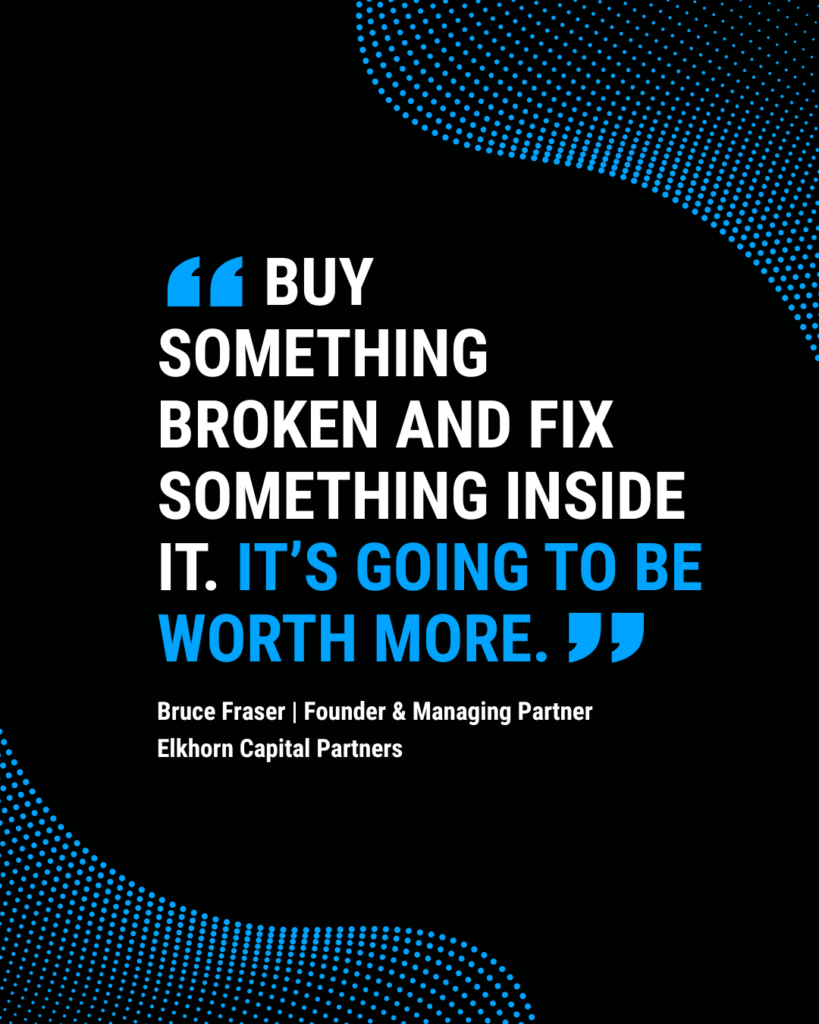
“Buy something broken and fix something inside it. It’s going to be worth more.”
This is the essence of value-add investing—but executed with discipline. It’s nerve-wracking to invest in something damaged, but understanding construction, renovations, and ROI can streamline the decision process.
The Problem With “Pretty” Deals
Many investors chase stabilized, Class A assets, assuming they’re safer. But Fraser argues the opposite. From an investment perspective, these properties suffer from:
- Limited upside
- Heavy reliance on cap rate compression
- Vulnerability to market shifts
According to Freddie Mac’s 2024 Multifamily Outlook, rent growth in Class A properties slowed to under 2% annually, while workforce housing often outperformed due to demand elasticity—which is why Fraser and his team place such an emphasis on workforce housing.
ROI Takeaway
The multifamily ROI lessons here:
- Value is created through forced appreciation, not market appreciation.
- Distressed or underperforming assets offer control over outcomes.
- Focus on operational upside, not speculation.
Related Reading: How to Increase NOI: Strategies For Multifamily
3. Follow the Data—Not the Crowd
Fraser is blunt about why many investors in this space fail. It comes down to a mixture of monkey-see, monkey-do and investing FOMO:
“A lot of people didn’t know why they were in the trade… they just followed where everyone else was going.”
This herd mentality has led to oversupply in markets like Austin, Atlanta, and Houston, and it will continue to hamper other markets across the country.
The Supply Problem
When inventory growth outpaces demand, the results are declining rents, occupancy pressure, and threatened ROI.
Fraser saw this coming:
“If you can go rent a brand new building for the same price as the competition, you’ll do so to stand out against the competition. Your competitors have no choice but to lower their rents because their buildings aren’t brand new.”
Contrast that with Fraser’s approach. Instead of chasing hot markets, he focuses on:
- Affordability metrics
- Supply constraints
- Income-to-rent ratios
ROI Takeaways
Here are the three major lessons on how to maximize ROI on multifamily investments:
- Avoid oversupplied markets—even if they’re popular
- Focus on rent-to-income ratios and affordability
- Use data to identify where pricing power actually exists
4. Optimize Operations—That’s Where ROI Is Won
Fraser makes a critical point that many investors overlook, especially those focused primarily on acquisitions and financing:
“You’ve got a $20 million asset and someone is making $60,000 to run it… That doesn’t make sense.”
In other words, property-level execution drives returns. Too often, owners treat on-site management as an expense to minimize rather than a revenue engine to optimize. But the reality is that leasing decisions, rent collections, maintenance response times, and tenant experience all directly impact NOI.
When the person responsible for those outcomes is underpaid, undertrained, or disengaged, it creates operational drag that can quietly erode millions in value over time.
The Power of Operational Leverage
This is where Fraser’s emphasis on property-level execution becomes tangible. Small, consistent operational improvements—driven by strong management—can have an outsized impact on asset value.
Fraser gives a concrete example:
- Add $100/month in rent across 500 units.
- That’s $600,000 in additional NOI annually.
- At a 6.5% cap rate, that translates into ~$9.2 million in value creation.
This is not hypothetical—it’s operational math. It illustrates how decisions made at the property level—pricing units correctly, improving collections, executing renovations efficiently, and maintaining high occupancy—translate directly into enterprise-level value. In other words, great operators don’t just manage properties—they manufacture equity through disciplined execution.
Why In-House Management Matters
Here’s a real-world case study: Fraser brought property management in-house after repeated failures from third-party providers. As he explains:
“We were having trouble finding people who would actually follow through… it was impacting our investors.”
By aligning incentives, they achieved remarkable results with wide-spanning benefits, including:
- Occupancy increases from ~90% to 98%.
- Better rent collection (economic occupancy focus).
- Faster execution on value-add initiatives.
So, while they had the costs of running in-house management, that investment paid off in the end through improved operations, tenant retention, and increased cash flow.
ROI Takeaways
Three major ROI lessons from this section:
- Treat property management as a profit center, not a cost center.
- Align incentives with performance.
- Focus on economic occupancy, not just physical occupancy.
5. Use Incentives to Drive Performance
One of the most actionable insights from Fraser is how compensation impacts asset performance.
“We pay a market base, but managers can make 50% to 100% more with incentives.”
That’s huge.
But why does it matter?
Because even small operational improvements compound into massive value.
For example, if better management increases NOI by just $100,000 at a 6% cap rate, it translates into $1.67 million in value creation.
Fraser puts it plainly:
“You pay someone an extra $30,000… And you probably made millions.”
You both win in this scenario—and you give up only a small percentage of your ROI.
ROI Takeaways
Big takeaways from this section—both from Fraser’s perspective and from industry best practices:
- Incentivize outcomes, not activity.
- Reward revenue growth and collections—not just occupancy.
- Invest in talent—it pays exponential returns.
6. Structure Deals for Inflation
Fraser’s macro perspective plays a huge role in how he underwrites and structures every deal, particularly in an environment where inflation and monetary policy are anything but stable.
Rather than relying solely on market growth, he builds investments designed to perform even as the value of money changes over time. That means prioritizing durable income streams, locking in favorable debt, and owning assets that can reprice alongside inflation.
“I’d rather own the hard asset than the paper… Hard assets protect against inflation.”
Why Multifamily Works
Real estate, especially multifamily, has built-in inflation protection that helps investors weather market downturns. Three big advantages:
- Rents can adjust (within limits).
- Debt gets inflated away (if fixed-rate).
- Replacement costs rise, increasing asset value.
Multifamily rents have historically grown at or above inflation over long periods, making it one of the most reliable inflation hedges.
ROI Takeaways
Three major lessons for maximizing your multifamily investment ROI:
- Use fixed-rate debt in inflationary environments.
- Focus on assets where rents can realistically grow.
- Avoid investments that rely on fixed income streams.
7. Avoid “Math Doesn’t Work” Deals
Fraser is highly critical of deals that require optimistic assumptions. This is a key lesson: if the deal only works under perfect conditions, it’s not a good deal.
Common Red Flags
So, how do you spot a bad deal? Three common calling cards to watch for:
- Dependence on rent growth in oversupplied markets.
- Thin margins after debt service.
- Aggressive exit cap assumptions.
Walking away from these deals—even if they feel right—can save you headaches later on when the investment inevitably goes south.
ROI Takeaways
The big lessons here? They are:
- Stress test every deal.
- Assume things will go wrong—and plan for it.
- Walk away from deals that require “hope.”
8. Focus on Workforce Housing
Fraser has built his platform around workforce housing for a reason—it sits at the intersection of strong demand, limited new supply, and meaningful operational upside.
While many investors chase newer, stabilized assets, he targets properties where inefficiencies and mismanagement create clear opportunities for improvement. This segment of the market is often overlooked, but that’s exactly where disciplined operators can create the most value.
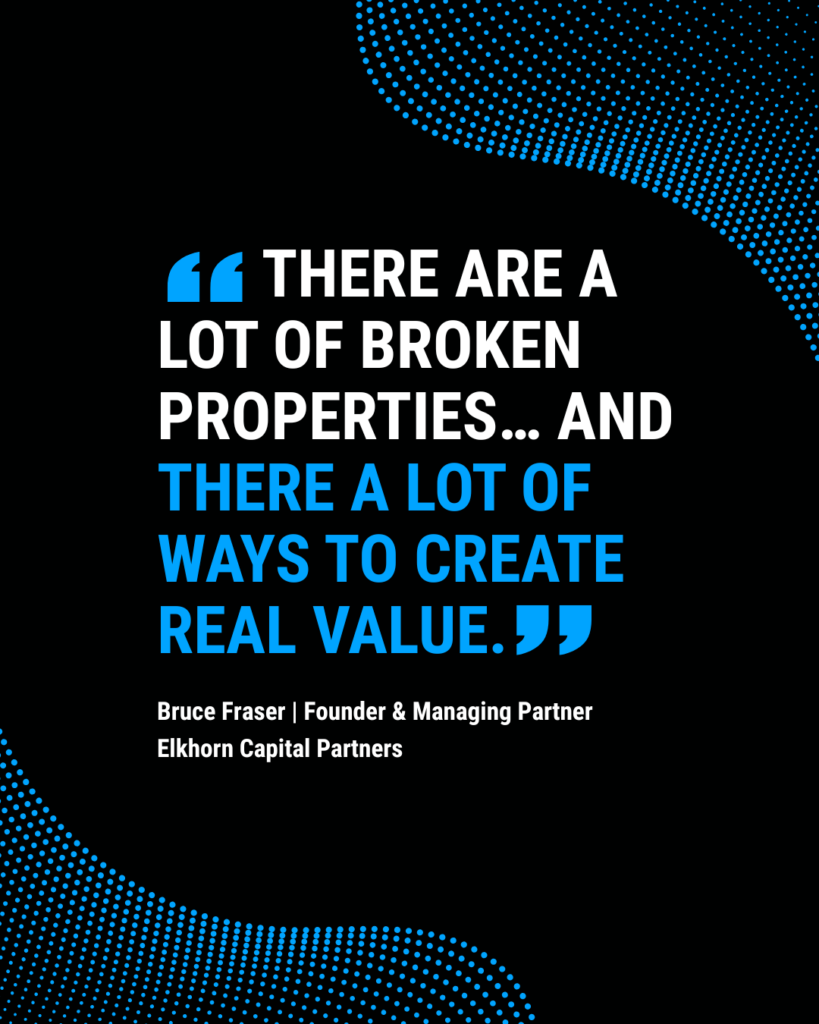
As Fraser says: “There are a lot of broken properties… And there are a lot of ways to create real value.”
Why Workforce Housing Performs
There are a few reasons why workforce housing performs so well year after year. Three of the biggest factors:
- High demand (it’s essential housing).
- Lower new supply (harder to build economically).
- Greater operational upside.
Recent Census Bureau data found nearly half of renter households are cost-burdened, demonstrating an immediate demand for affordable units.
ROI Takeaways
Three lessons to keep in mind here:
- Workforce housing offers durable demand and operational upside.
- Focus on improving existing assets rather than building new—it’s much more affordable.
- Affordability creates pricing resilience.
9. Build the Right Team
Perhaps the most overlooked multifamily ROI driver is people.
Fraser credits his team with sustaining performance during one of the hardest periods of his life, when his wife suffered from the long-term effects of COVID:
“If I didn’t have the team I had, it would have been a disaster.”
Despite personal challenges, his firm had its best financial year ever.
What Makes a Strong Team?
So, how can you build an equally strong team that can withstand challenges and grow even during difficult periods? Three factors based on Fraser’s input and other best practices:
- Build a team environment that adopts an investor-first mindset.
- Find people with the ability to execute without constant oversight
- Foster a willingness to challenge and improve systems
ROI Takeaways
Three major lessons here:
- Hire for character and competence—not just skills, background, and education.
- Build systems that scale beyond you, especially if your personal life could dominate your attention.
- Your team is a direct multiplier of returns, so build your team accordingly.
10. Think Long-Term, Act Precisely
Fraser’s strategy isn’t about quick wins—it’s about compounding advantages over time.
“We let the math lead us… And it takes us where it takes us.”
This requires:
- Patience
- Discipline
- Willingness to go against the crowd
These aren’t easy skills to develop, but focused attention on building these qualities can compound your personal and professional growth, leading to an immensely successful career (and portfolio).
Final Thoughts: ROI Is Created, Not Found
Maximizing ROI on multifamily investments isn’t about timing the market or chasing trends. It’s about:
- Buying the right assets
- Structuring deals intelligently
- Operating with precision
- Managing risk relentlessly
Fraser’s approach can be summed up in one idea:
“If you understand the math—and you execute—you can predict outcomes.”
In a market where many investors rely on optimism, that level of clarity is a competitive advantage. If necessary, run a full multifamily property management ROI analysis to find your true return on investment.
About Bruce Fraser
Bruce Fraser is the founder and managing partner of Elkhorn Capital Partners, a multifamily investment firm focused on acquiring and operating value-add and distressed workforce housing across the central United States.
With a background in quantitative investing and risk management, Fraser brings a highly analytical, data-driven approach to real estate—one that emphasizes downside protection, disciplined execution, and long-term value creation.
Prior to launching Elkhorn in 2010, Fraser spent over a decade running an options-based hedge fund, where he specialized in absolute return strategies designed to perform across market cycles. Notably, during the 2008–2009 financial crisis—when many investors experienced significant losses—his fund reached all-time highs, reinforcing his commitment to risk management and macro-driven decision-making.
At Elkhorn, Fraser has applied those same principles to real estate, building a platform that now oversees approximately $1 billion in assets across both private real estate and public market strategies. His investment philosophy centers on identifying mispriced opportunities, particularly in overlooked markets like Oklahoma, and creating value through operational improvements rather than speculation.
Known for his candid perspective and macroeconomic insights, Fraser is also an active voice on LinkedIn, where he shares data-driven analysis on markets, inflation, and investment strategy.
About the Did It Close? Podcast
Did It Close? is a commercial real estate podcast hosted by Colliers VPs and Massimo coaches Bryan McCann and David Dirkschneider. The show highlights dealmakers, operators, and industry specialists—sharing tactics and insights designed for CRE professionals, including topics like multifamily property management ROI analysis.
Subscribe Today
You can subscribe to Did It Close? on Spotify and YouTube, and you can follow us on social media:
Keep Reading: If you liked this article, check out What Is Creative Placemaking? or 1031 Exchanges & DSTs.