
Article Summary: What is creative placemaking? Well, creative placemaking is an urban development approach that integrates planning, design, culture, and community engagement to transform underutilized spaces into active, meaningful places. In this episode, we interview Jeremy Waldrup, the Executive Director of the Pittsburgh Downtown Partnership and Pittsburgh Magazine’s 2025 Pittsburgher of the Year, to discuss his vision, strategy, and dedication to revitalizing Pittsburgh through creative placemaking and adaptive reuse. Learn more about Jeremy Waldrup.
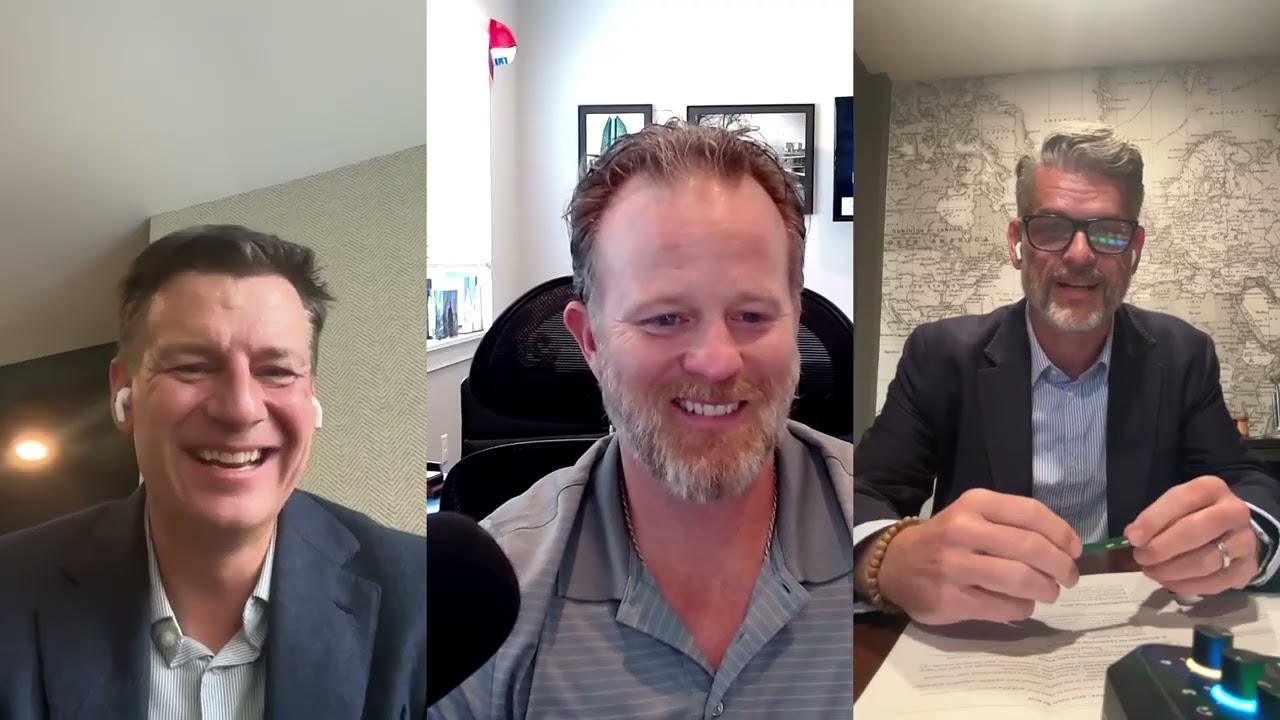
Table of Contents
Episode Summary
What Is Creative Placemaking?
5 Benefits of Creative Placemaking
5 Major Benefits of Adaptive Reuse In Placemaking
The Ideology Behind Transformational Public Investment
Why These Models Matter for Downtowns Today
About Jeremy Waldrup
About Did It Close?
Subscribe Today
Creative Placemaking FAQ
Episode Summary
Meet Jeremy Waldrop, the Executive Director of the Pittsburgh Downtown Partnership (PDP). In this episode, Jeremy shares his background in urban economic development, including his experience in New York City government under the Bloomberg administration and his long tenure in Pittsburgh.
Jeremy explains the mission of the PDP: to lead downtown’s transformation through partnerships that prioritize cleanliness, safety, vibrancy, economic growth, and long-term sustainability.
Much of our discussion explores how downtown Pittsburgh has evolved and where it faces challenges, particularly in the post-COVID era. Jeremy outlines how historic office buildings, once the backbone of the downtown economy, are no longer viable as traditional office space.
This has accelerated the need for adaptive reuse and creative placemaking—especially converting older office buildings into residential units—while preserving the city’s architectural heritage.
We dive into the mechanics of downtown revitalization: public-private partnerships, financing tools (such as tax abatements, historic tax credits, grants, and patient capital), and the importance of aligning city, county, state, and private stakeholders. We discuss how fear of decline, coupled with civic leadership and corporate engagement, became a catalyst for action in Pittsburgh.
A significant portion of the conversation focuses on “placemaking”—what makes downtowns attractive places to live, work, and gather. Jeremy emphasizes that people create vibrant cities, not buildings alone. Topics include the importance of public spaces, events, safety, family-friendly amenities, women-centered design, and building downtowns that work for an eight-year-old and an eighty-year-old alike.
The Kaufmann’s Building serves as a real-world case study of adaptive reuse. Once a massive department store, it has been transformed into a mixed-use development with retail, hotel space, parking, and hundreds of residential units. The building illustrates both the difficulty and potential of converting large historic structures and how thoughtful amenities can help activate downtown beyond traditional business hours.
The conversation then touches on comparisons to other cities—such as Oklahoma City’s MAPS initiative, Tulsa’s Gathering Place, and international examples—and reflections on the universal challenges cities face in attracting residents, talent, and investment.
The episode ends on a personal note, with Jeremy discussing work-life balance, saying “yes” to new experiences, and the shared optimism that cities can reinvent themselves through collaboration and intentional design.
Related Reading: Commercial Real Estate Virtual Assistant: How Offshore Talent (and AI) Can Transform a Broker’s Business
What Is Creative Placemaking?
Creative placemaking for real estate builds on the idea that people—not buildings alone—create successful cities. It combines physical design with programming, culture, and community participation to activate spaces in ways that feel authentic, inclusive, and economically productive.
Rather than focusing solely on real estate or infrastructure, creative placemaking prioritizes human experience, especially around how people move through, gather in, and emotionally connect to a place.
According to the National Endowment for the Arts, creative placemaking occurs when public, private, nonprofit, and community sectors partner to shape the physical and social character of a neighborhood around arts, culture, and shared activity.
Research from organizations such as the Brookings Institution shows that successful placemaking increases economic resilience, improves public safety perceptions, attracts foot traffic, and strengthens local identity.
At its core, creative placemaking for real estate recognizes that cities compete on quality of life. In a post-pandemic environment—where workers have more choice over where and how they live—downtowns must earn foot traffic instead of assuming it will come.
5 Benefits of Creative Placemaking
For commercial real estate professionals, creative placemaking isn’t just a philosophical framework—it’s a performance strategy. When executed intentionally, it drives measurable economic, social, and operational outcomes that directly impact asset values and long-term downtown viability.
Here are five core benefits of creative placemaking that matter most for investors, developers, and brokers:
1. Increased Foot Traffic and Retail Performance
At its most practical level, creative placemaking increases dwell time and repeat visitation. When public spaces incorporate programming, art, events, and inclusive design, they give people a reason to come downtown—and stay longer.
Research from the Brookings Institution consistently shows that mixed-use districts with strong place identity attract more consistent foot traffic than single-use office corridors. More foot traffic translates directly into stronger retail performance, healthier restaurant ecosystems, and improved leasing velocity for ground-floor space.
For CRE professionals, this means creative placemaking for real estate isn’t an abstract civic goal—it’s a retail stabilization strategy.
2. Stronger Economic Resilience
Downtowns that rely heavily on one asset class—particularly office—are more vulnerable to economic shocks. Creative placemaking supports diversification by encouraging residential, cultural, hospitality, and recreational uses to coexist alongside traditional commercial space.
Studies cited by Brookings and other urban policy researchers show that downtowns with higher residential density and cultural activity recovered more quickly from post-pandemic disruptions. A diversified downtown is simply more resilient.
For landlords and investors, resilience protects long-term NOI and reduces vacancy volatility across cycles.
3. Improved Perception of Safety and Vibrancy
Perception drives behavior. Even if crime statistics remain stable, empty sidewalks and dark storefronts create a narrative of decline.
Creative placemaking counters that by activating public spaces through events, lighting, family-friendly amenities, and intentional programming. The National Endowment for the Arts emphasizes that when arts and community engagement shape a neighborhood’s physical and social character, residents feel a stronger sense of ownership and belonging.
More “eyes on the street,” extended activity beyond business hours, and visible programming contribute to improved safety perceptions—which, in turn, encourage more visitation and investment.
For brokers marketing downtown assets, perception is often as important as rent comps.
4. Preservation of Local Identity and Competitive Differentiation
In an era where many urban cores risk becoming architecturally and culturally homogenous, creative placemaking reinforces what makes a city unique.
That’s a huge benefit of creative placemaking, especially for the city’s overall “brand.”
By integrating local culture, historic preservation, and community narratives into development decisions, cities avoid becoming interchangeable. This identity differentiation matters in talent attraction, tourism, and corporate relocation decisions.
From a leasing perspective, tenants increasingly evaluate not just square footage—but neighborhood experience. A district with a clear identity often commands stronger tenant demand and premium positioning.
5. Catalytic Impact on Private Investment
Perhaps most important of the benefits of creative placemaking for CRE professionals: creative placemaking often unlocks private capital.
When public investment clearly signals long-term commitment—through streetscape improvements, parks, cultural anchors, or adaptive reuse incentives—it reduces perceived risk for private developers. History shows that well-executed public realm investments can catalyze surrounding mixed-use development, residential growth, and hospitality expansion.
In cities like Oklahoma City and Tulsa, strategic placemaking initiatives have become case studies in how public infrastructure can drive private momentum. Once confidence builds, capital follows.
For investors evaluating emerging downtown districts, the presence of coordinated placemaking efforts is often an early indicator of future growth.
5 Major Benefits of Adaptive Reuse In Placemaking
Adaptive reuse—the process of repurposing existing buildings for new uses—is one of the most effective tools in creative placemaking, particularly in legacy downtowns with older building stock.
Research from the Urban Land Institute (ULI) and the American Planning Association consistently highlights several benefits of adaptive reuse:
1. Economic Efficiency and Risk Reduction
Adaptive reuse often costs less than ground-up construction when accounting for land acquisition, infrastructure, and entitlement timelines. It also allows cities and developers to reuse existing utilities, street grids, and transit access—reducing upfront risk.
2. Preservation of Cultural and Architectural Identity
Older buildings provide scale, materials, and craftsmanship that are difficult to replicate today. Studies show that districts with preserved historic fabric tend to attract more foot traffic and higher-value small businesses than homogenous new developments.
3. Environmental Sustainability
Incredibly, adaptive reuse can slash carbon emissions by 40%, according to Gensler, compared to demolition and new construction. Adaptive reuse aligns closely with climate goals by reducing construction waste and energy consumption.
4. Downtown Activation Beyond Office Hours
Converting obsolete office buildings into residential or mixed-use properties increases 24/7 activity. Additional research from Brookings indicates that downtowns with a higher residential share recover faster from economic shocks and support more resilient retail ecosystems.
5. Incremental Density Without Displacement
Adaptive reuse allows cities to add housing units and activity without large-scale demolition, helping mitigate displacement while still increasing density and tax base productivity.
These benefits explain why many cities are now prioritizing office-to-residential conversions as a cornerstone of downtown recovery strategies.
The Ideology Behind Transformational Public Investment
Large-scale creative placemaking initiatives often succeed when they follow a few consistent principles, especially:
- clarity of purpose
- public trust
- catalytic impact
Two frequently cited examples—Oklahoma City’s MAPS program and Tulsa’s Gathering Place—illustrate this approach.
Oklahoma City’s MAPS Program
The Metropolitan Area Projects (MAPS) initiative is widely regarded as one of the most successful examples of voter-approved, pay-as-you-go urban investment in the U.S.
Key ideological principles behind MAPS include:
- Dedicated, time-limited funding: A temporary sales tax with a clearly defined end date
- Project specificity: Voters approved exact projects before funds were collected
- No debt financing: Projects were built only after funds were raised
- Focus on quality-of-life infrastructure: Parks, arenas, civic spaces, and riverfront improvements
Urban policy research frequently cites MAPS as a model for rebuilding public trust. By eliminating ambiguity around how funds would be used, Oklahoma City reduced political friction and created momentum for private investment around public assets.
Since MAPS launched, downtown Oklahoma City has seen significant increases in residential development, tourism activity, and corporate relocation—outcomes supported by long-term economic development studies.
A few of the projects MAPS has helped develop include:
- Chickasaw Bricktown Ballpark (A $34 million, 12,000-seat brick ballpark with natural grass playing field and ADA-compliant design)
- Civic Center Music Hall (A beautiful $53 million renovation for major theatrical, dance, and music groups)
- Ronald J. Norick Downtown Library ($21.5 million went into erecting a four-story, 114,130-square-foot library to replace the previous library built in 1953)
- Cox Convention Center (This $60 million project added 100,000 square feet—including a ballroom and grand staircase—to the former convention center)
Tulsa’s Gathering Place
Tulsa’s Gathering Place represents a different but complementary ideology: philanthropy-led placemaking as a civic anchor.
Key principles include:
- World-class design as an equity tool: High-quality public space accessible to all income levels
- Health, wellness, and family orientation: Playgrounds, trails, and inclusive design
- Long-term operational planning: Endowment-backed maintenance to ensure durability
- Catalytic intent: Designed to raise the city’s profile and attract talent and investment
Urban research consistently shows that iconic public spaces—when paired with accessibility and programming—drive surrounding real estate demand, improve public health outcomes, and strengthen civic pride. The Gathering Place has become a national case study cited by industry leaders for its social return on investment.
As the Urban Institute writes in Investing In Equitable Urban Park Systems:
“Perhaps the most notable thing about the park, however, is not its size or cost, but rather what it aims to symbolize and do. Tulsa remains highly segregated by race and class, with poorer, black neighborhoods in the north and wealthier, white neighborhoods to the south. The park was intentionally designed to bridge that divide and provide a space where diverse communities, and particularly children, could freely interact in play and discovery.”
Why These Models Matter for Downtowns Today
The common thread across adaptive reuse projects and large-scale placemaking initiatives is intentionality. Successful downtown revitalization is rarely accidental. It requires:
- Clear goals
- Cross-sector collaboration
- Public investment that unlocks private confidence
- Design choices that prioritize people over vehicles or single-use districts
Experts at Brookings suggest that downtowns with diversified uses—housing, culture, recreation, and work—are more resilient to economic disruption than those reliant on a single sector.
Creative placemaking, supported by adaptive reuse and strategic public investment, offers a framework not just for recovery—but for long-term relevance (another major benefit of creative placemaking).
About Jeremy Waldrup
Jeremy Waldrup is the President and CEO of the Pittsburgh Downtown Partnership (PDP), where he has served since May 2011. He leads the organization’s vision and strategy to ensure Downtown Pittsburgh remains a vibrant and innovative place to live, work, and play—bringing together stakeholders across the public, private, and philanthropic sectors.
Before moving to Pittsburgh, Jeremy spent a decade in New York City government, including serving as Assistant Commissioner of District Development for NYC’s Department of Small Business Services. In that role, he supported the oversight and capacity building of the city’s Business Improvement Districts and helped invest in commercial corridor revitalization through annual grant-making to local economic development organizations.
Earlier in his career, Jeremy worked in business support and community development with the South Bronx Overall Economic Development Corporation and Charlotte Center City Partners.
He has also worked in the private sector as a consultant on downtown master plans for Schenectady, New York and his hometown of Asheville, North Carolina.
In Pittsburgh, Jeremy has been involved in civic leadership and community initiatives, including participation in the inaugural class of Lead Now and graduating from Leadership Pittsburgh (Class XXXI).
He serves as a board member of Pittsburgh Bike Share and the Pittsburgh Public Theater and has received multiple awards and recognitions, including Bike Pittsburgh’s Advocate of the Year, Pittsburgh Business Times Fast Tracker, and Smart Business’s Smart 50.
Education: Jeremy holds a Master’s in Public Administration from the University of Colorado and a B.A. in Economics from the University of North Carolina at Charlotte.
About Did It Close?
Did It Close? is a commercial real estate podcast hosted by CRE experts and Massimo coaches Bryan McCann (Senior VP, Colliers) and David Dirkschneider (Executive VP, Colliers).
Together, Bryan and David are highlighting experts in the field while educating fellow CRE professionals and industry insiders about the latest trends and tactics in commercial real estate.
Learn more about Did It Close?
Subscribe Today
You can subscribe to Did It Close? on Spotify and YouTube, and you can follow us on social media:
Creative Placemaking FAQ
What is creative placemaking?
Creative placemaking is an urban development strategy that combines design, culture, programming, and community engagement to transform underutilized spaces into vibrant, meaningful places. It emphasizes human experience—how people interact with and connect to a space—rather than focusing solely on buildings or infrastructure.
Why is creative placemaking important for downtown areas today?
In a post-pandemic world, downtowns can no longer rely on office workers alone to drive activity. Creative placemaking helps cities attract residents, visitors, and businesses by improving quality of life, increasing foot traffic, and creating destinations people actively choose to spend time in.
How does creative placemaking benefit commercial real estate professionals?
Creative placemaking drives measurable outcomes like increased foot traffic, stronger retail performance, improved safety perception, and higher tenant demand. It also supports long-term asset value by making districts more resilient and attractive to investors.
What is adaptive reuse, and how does it relate to placemaking?
Adaptive reuse is the process of repurposing existing buildings—such as converting old office spaces into residential or mixed-use properties. It’s a key tool in creative placemaking because it preserves historic character while introducing new uses that activate downtown areas beyond traditional business hours.
What are the key benefits of adaptive reuse in urban development?
Adaptive reuse offers several advantages, including lower development costs, preservation of architectural identity, reduced environmental impact, increased downtown activity, and the ability to add density without large-scale displacement.
What role do public-private partnerships play in successful placemaking?
Public-private partnerships are essential to placemaking success. They align stakeholders across government, private developers, and community organizations to fund, plan, and execute projects. Strategic public investment—such as parks, infrastructure, and incentives—often helps unlock private capital and accelerate downtown revitalization.